
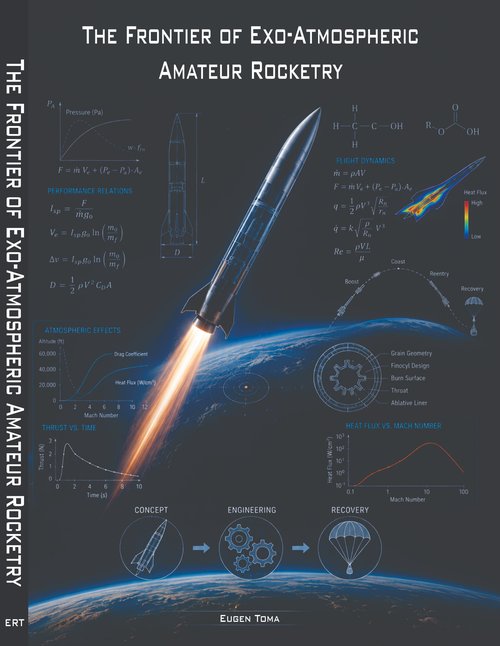
This book represents hundreds of hours of research and delivers an exhaustive, production-grade engineering blueprint for designing, simulating, and flying high-performance suborbital research rockets. Spanning from foundational propulsion chemistry to exo-atmospheric apogee operations, this volume bridges the critical gap between academic theory and flight-proven hardware implementation. Built around a baseline vehicle capable of reaching an apogee of 500,000 ft (152.4 km) and velocities of Mach 6.15, every chapter provides rigorous mathematical derivations, finite-element structural models, and end-to-end Python simulation suites to equip practitioners with tools for real-world execution. Across its ten chapters, the book explores the full multi-disciplinary lifecycle of suborbital systems: solid motor internal ballistics, composite pressure vessel mechanics, strapdown inertial navigation, and 15-state Error-State Extended Kalman Filtering (ES-EKF). Readers are guided through relativistic multi-constellation GNSS carrier-phase tracking, high-throughput S-band COFDM telemetry link budgets, high-emissivity ablative thermal protection sizing, and dual-mode recovery staging. Concluding with automated launch operations, 3-DOF Monte Carlo range safety risk modeling under FAA 14 CFR Part 450 regulations, and a complete system Bill of Materials, this book serves as an indispensable reference for aerospace engineers, advanced experimentalists, and academic research teams pushing the boundaries of high-altitude flight.
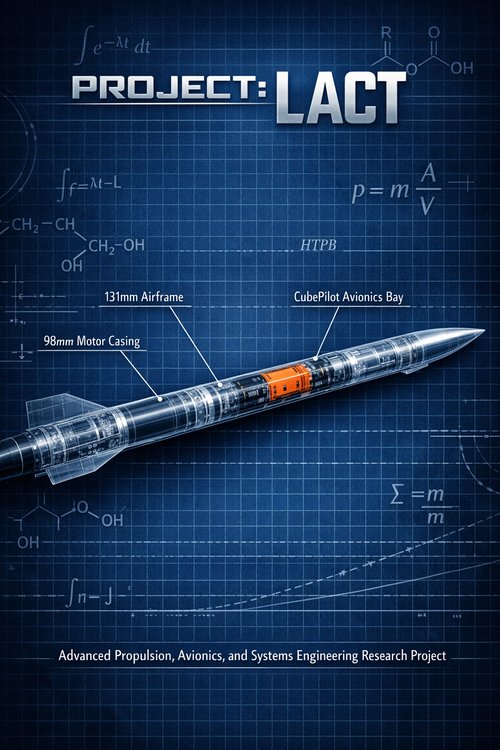
The smell of ammonium perchlorate and the distinct sharp ozone of a high-current ignition are scents that define a specific kind of life. For those who have spent decades staring at CAD assemblies and thermal gradient simulations, a rocket is never just a "tube with a motor" — it is a symphony of conflicting constraints, an exercise in managing the violent release of chemical energy within the fragile confines of a carbon-fiber shell. This book bridges the widening gap between high-power amateur rocketry and the rigorous, zero-failure world of tactical aerospace systems. Built around the development of Lithium-Aluminum Core Technology (LACT), it covers the transition from small-scale solid motors to complex high-energy propulsion, atmospheric research at the limits of what a non-governmental entity can achieve, and the deep interplay between propulsion chemistry and structural resonance at Mach 3 and beyond.
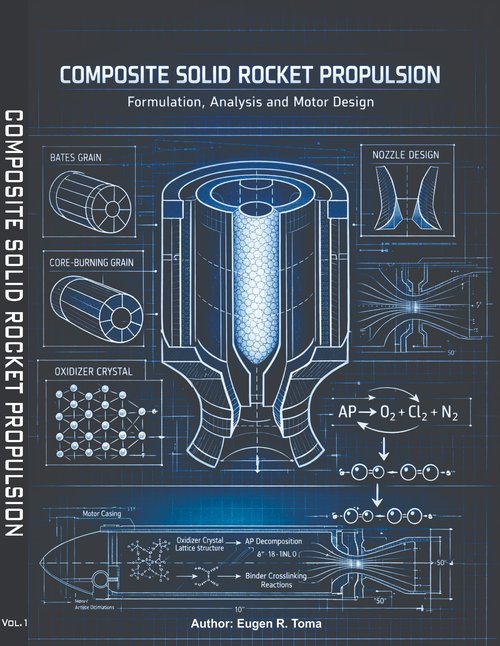
Most books about solid rocket propulsion describe what happens inside a motor. This one tells you how to build it. Composite Solid Rocket Propulsion is a complete technical reference for the serious practitioner, the certified high-power rocketeer, the experimental motor builder, and the aerospace engineering student who wants theory grounded in real hardware. Drawing on more than a decade of hands-on laboratory work at ADS-SPS-LAB, this volume covers the full arc of composite propellant work: from the regulatory framework that governs manufacture and flight, through the chemistry of oxidizers, binders, and catalysts, to the engineering of grains, casings, nozzles, and static test stands, and the troubleshooting knowledge that only comes from watching things go wrong. At the heart of this book is a formulation catalog unlike anything available in the open literature. Sixteen fully characterized composite propellant formulas are presented in complete technical detail — ingredient percentages, ballistic properties, processing notes, and analytical commentary — spanning original ADS-SPS-LAB compositions, historical JPL polysulfide formulas from the Loki Dart and Super Loki sounding rocket programs, and formulations developed by the MIT Rocket Team.

A trusted reference for beginners as well as professional drone operators, educators, public safety officials, government contractors, and commercial service providers seeking to safely and legally operate unmanned aircraft in the United States. Developed from official FAA regulations, advisories, certification standards, and personal operational experience, this guide simplifies complex rules and presents them in a practical, field-ready format. Whether you're studying for your Part 107 exam, planning your first client mission, or refining an enterprise compliance protocol, this book is structured to meet your operational needs.
A comprehensive resource for understanding and navigating Canadian drone regulations, flight standards, safety practices, and operational use cases. Canada has emerged as one of the leading nations in establishing clear, tiered rules for remotely piloted aircraft systems (RPAS), balancing innovation with airspace safety and public trust. Whether you're flying for recreation, research, enterprise, emergency response, or public infrastructure monitoring, this guide walks through every stage of RPAS ownership and operation in Canada's regulatory environment.
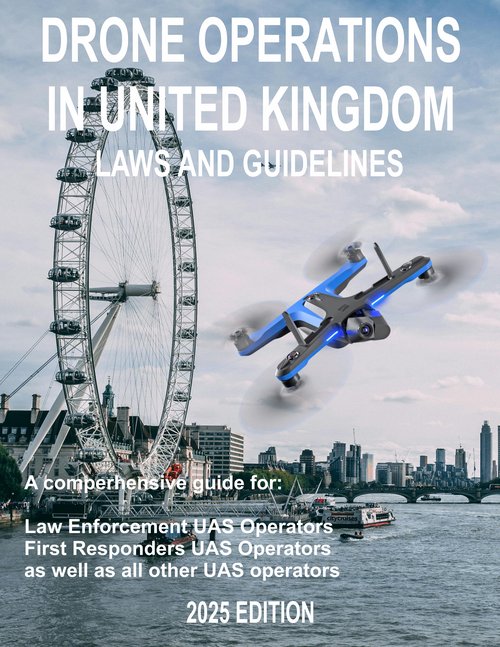
A practical guide to unmanned aircraft systems (UAS) operations under the Civil Aviation Authority (CAA) regulatory framework. The U.K. has adopted a risk-based framework that applies rules consistently depending on the category of operation, rather than whether the flight is commercial or recreational. Whether you are a filmmaker flying for business, a surveyor collecting data, or a recreational flyer, the same fundamental safety principles apply. This guide covers the CAA regulatory structure, authorizations, training requirements, and risk assessment processes for professional and higher-risk operations.
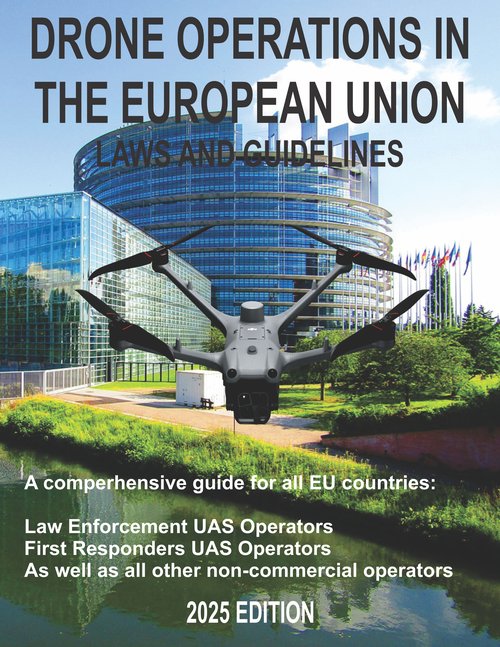
A comprehensive reference for drone operators, organizations, and policymakers working within the European Union. With 27 member states, each with its own aviation authority and local practices, the European Union Aviation Safety Agency (EASA) has introduced a harmonized regulatory framework designed to unify drone rules across borders. This book provides a clear overview of the EU-wide regulations that apply to all member states while dedicating a full chapter to each country — covering registration requirements, pilot licensing standards, operational limitations, airspace restrictions, and practical guidance for both recreational and commercial operations. Additional sections cover safety practices, law enforcement and emergency applications, commercial opportunities, and Europe's emerging U-Space system for unmanned traffic management.
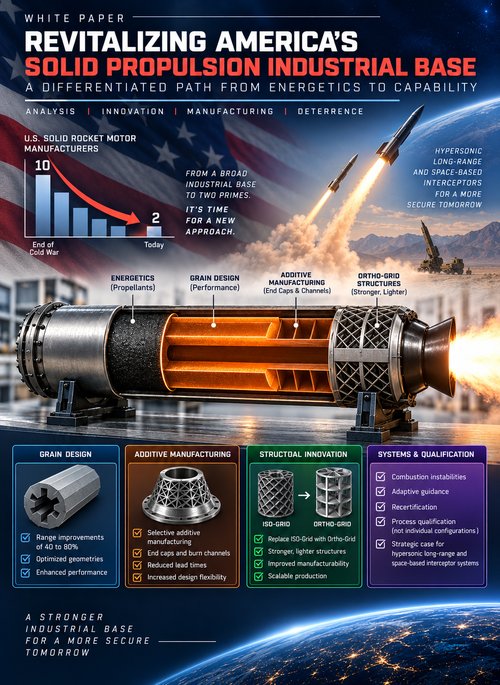
A Case for 21st-Century Manufacturing in Tactical and Strategic Rocket Systems
The U.S. solid rocket motor industrial base has contracted from ten companies to two dominant primes since the end of the Cold War. This paper argues against replicating the existing model and proposes a differentiated manufacturing philosophy: working from energetics upward, leveraging agile and additive manufacturing, replacing ISO-Grid structural patterns with Ortho-Grid, and qualifying processes rather than individual configurations. Technical analysis covers grain design range improvements of 40 to 80 percent, selective additive manufacturing for end caps and burn channels, combustion instabilities, adaptive guidance recertification in under 60 seconds, and the strategic case for hypersonic long-range and space-based interceptor systems.
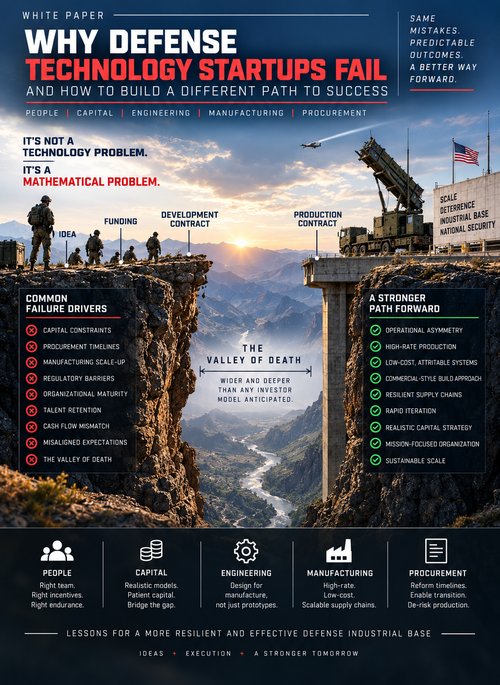
An Asymmetric Approach to Hardware Development and Scaled Production
Defense technology startups are failing at a predictable rate and for predictable reasons, not because of insufficient engineering talent or lack of market demand, but because of structural misalignment between how they are capitalized and how the government buys things. This paper diagnoses the Valley of Death, the requirements creep trap, and the program silo failure mode, then provides a practitioner's blueprint covering the dual-revenue model, the block engineering method, testing discipline, vertical integration strategy, the parallel-team method for high-risk subsystems, functional matrix organization, CapEx-light manufacturing philosophy, and the leadership architecture required to execute at venture speed in a defense procurement environment.
For bulk orders, academic licensing, or collaboration and co-authorship enquiries.